
Science
Research that answers what the public is asking.
Explore the science →Technology
Tools built at the frontier of health.
See the tools →Translation
Out of the ivory tower and onto the streets.
See the work →The public is already talking about health. Medicine and public health should be listening.
For over a decade John has followed one rule: go where the public is. That rule took him from pioneering big data analytics for health, through search-data surveillance and machine learning systems that monitor the world’s news and social media, to landmark studies of artificial intelligence.
He is a Professor of Medicine and computational epidemiologist at UC San Diego, where he is Head of AI at the Altman Clinical and Translational Research Institute, Vice Chief of Innovation in the Division of Infectious Diseases and Global Public Health, and Senior Scientist in the Qualcomm Institute.
Public health is often read narrowly, as something that happens far from the exam room. He sees it as the totality of health-relevant needs, from population to bedside: tracking population trends, building campaigns that reach at-risk groups, improving how care is delivered in the clinic.
That breadth is unusual. His published work reaches into emergency medicine and resuscitation, psychiatry and suicide prevention, addiction medicine, pharmacovigilance and drug safety, patient safety, primary care and the doctor-patient relationship, clinical informatics, obstetrics and reproductive health, adolescent medicine, infectious disease, pulmonary medicine, and preventive medicine, over a spine of health surveillance, misinformation research, network science, medical education, research methods, and policy evaluation. Most researchers pick a lane. John picked a mission: meet the public’s needs wherever they are.
Along the way he authored the most read paper in medicine for the year, earned a place among the top 1% of scientists worldwide (NIH iCite Relative Citation Ratio), received the Burroughs Wellcome Fund’s Innovator in Regulatory Science Award, and was called a “brave scientist” by Nate Silver for his work on controversial issues.
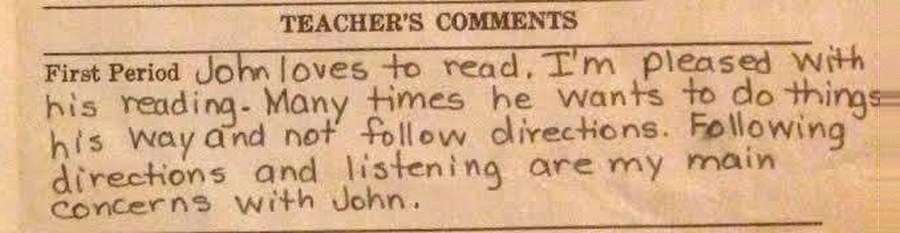
John never forgot where he came from: a trailer in the backwoods of North Carolina. He trained at CSU Bakersfield, Johns Hopkins, and Harvard, listed here in order of prestige, and he answers his email. He is also, technically, an expert on ethics: he once found $25,000 in cash and returned it to the rightful owner/businessman/drug dealer/whatever. ;)